

An Introduction to Hydrophilic Coatings
Innovations in hydrophilic coatings have played a key role in the growth of minimally invasive procedures. These lubricious, low friction coatings are reshaping what’s possible in medical device design and performance.
This guide to hydrophilic coatings for medical devices is designed to give manufacturers a thorough understanding of what hydrophilic coatings are, how they’re applied, why they’re used, and how to navigate the challenges and opportunities they present.
Understanding hydrophilic coatings is essential to selecting the right coating for a new device, delivering optimal patient outcomes, gaining a competitive advantage in the marketplace, and reducing potential problems during later development.
What Are Hydrophilic Coatings?
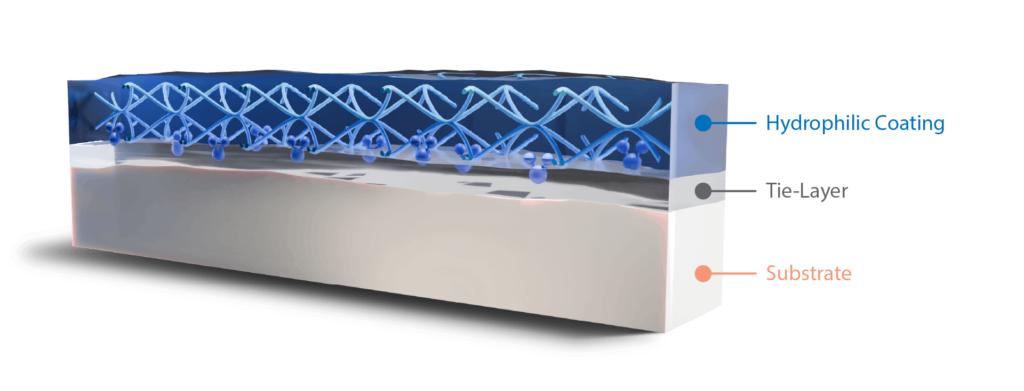
A hydrophilic coating is a thin layer bonded to the surface of a medical device which greatly reduces surface friction, becoming slippery when exposed to water or bodily fluids.
Most hydrophilic coatings consist of a cross-linked polymer to bind to a substrate and a hydrophilic polymer that absorbs moisture, creating a layer of lubrication. The coating acts like a microscopic sponge. The absorbed liquid provides excellent low friction characteristics as long as the coating remains wet, reducing friction by as much as 98% compared to an uncoated surface.
The reduced friction can make a device easier to maneuver while improving patient comfort and shortening recovery times.
Benefits of Hydrophilic Coatings
Hydrophilic coatings enhance the performance of medical devices by reducing friction during insertion and navigation through the body. This can lead to the following benefits:
- Enhanced device trackability
- Improved device handling
- Reduced insertion and navigation forces
- Minimized tissue trauma
- Increased patient comfort
- Reduced procedure time
- Reduced risk of the device sticking or kinking
The lubricious surface minimizes resistance in tortuous anatomies and can lead to shorter procedure times and fewer complications.
Trackability refers to the device’s ability to navigate smoothly through complex and tortuous vascular pathways, reducing resistance, and allowing precise control during advancement. Lubricious coatings help devices reach parts of the body that it otherwise couldn’t (like neurological applications) which enables new advancements in minimally invasive procedures.
Hydrophilic coatings can also reduce the risk of damage to delicate vessels and organs, which is especially important in complex or repeated interventions, while contributing to shorter recovery times and patient comfort.
The various enhancements ultimately benefit the doctor performing the procedure as well as the patient, improving the device in ways other technologies cannot. In a competitive medical device landscape, a high-quality hydrophilic coating can be the differentiator that turns a good product into a market leader.
How Are Hydrophilic Coatings Applied to Medical Devices?
There are several ways to apply hydrophilic coatings, but the two most common are dip coating or spray coating.

Dip coating involves submerging the medical device into a hydrophilic coating solution and then withdrawing it at a fixed rate, allowing a uniform layer to form prior to the solvent evaporating and/or curing.
The dip coating method is the most controllable and efficient process for applying hydrophilic coating to a medical device.
This method offers better efficiency and allows for easy scale-up from R&D to production. It tends to have better process control and lower variability when properly engineered.

Spray coating involves atomizing the coating solution and spraying it from a single nozzle to the surface of the device.
This method allows for selective or localized coating, which can be beneficial for certain device designs or performance needs.
However, spray coating can result in higher material waste due to overspray, especially when coating smaller or more intricate parts.
Despite this, it remains a viable option for applications where targeted coverage is required.
Curing Hydrophilic Coatings

After a hydrophilic coating is applied to a medical device, a curing process is needed to form the coating and crosslink the coating to the substrate.
Hydrophilic coatings are generally cured using UV light or by applying heat, with the methods varying depending on the coating chemistry, substrate and design of the device, and desired performance metrics.
UV-cured coatings have a shortened cycle time when compared to heat cured coatings. Heat-cured coatings can be beneficial for unique geometries that are hard to reach with UV light, such as inner-diameter applications.
In-House vs Contract Coating Services
One decision medical device manufacturers will need to make is whether they’ll opt to coat their devices in their own facility or utilize a contract coating service, where a third party coats the devices for them.
There are several obvious advantages to coating devices in-house, but plenty of drawbacks as well. Manufacturers will have more control over timelines and quality and can save money if they’re consistently producing a large number of devices.
In many cases, however, the upfront cost of coating equipment, testing equipment, cleanroom space, and challenges of maintaining a trained staff will lead manufacturers to outsource the coating application process.
Many hydrophilic coating companies offer contract coating services where they will apply the coating themselves. When working with a contract coating expert, these services can provide the necessary quality without as much upfront investment.
Be aware of whether or not the chosen coating company is willing to transfer the methods at a later point. Manufacturers should always have the option to bring services in-house if they choose to, and working with a coater who is experienced and willing to share optimal coating methods will make the transition much smoother.
Applications of Hydrophilic Coatings in Medical Devices
Devices That Require Hydrophilic Coatings
Hydrophilic coatings are most commonly used in interventional medical devices that must navigate through the body’s vasculature or delicate tissues.
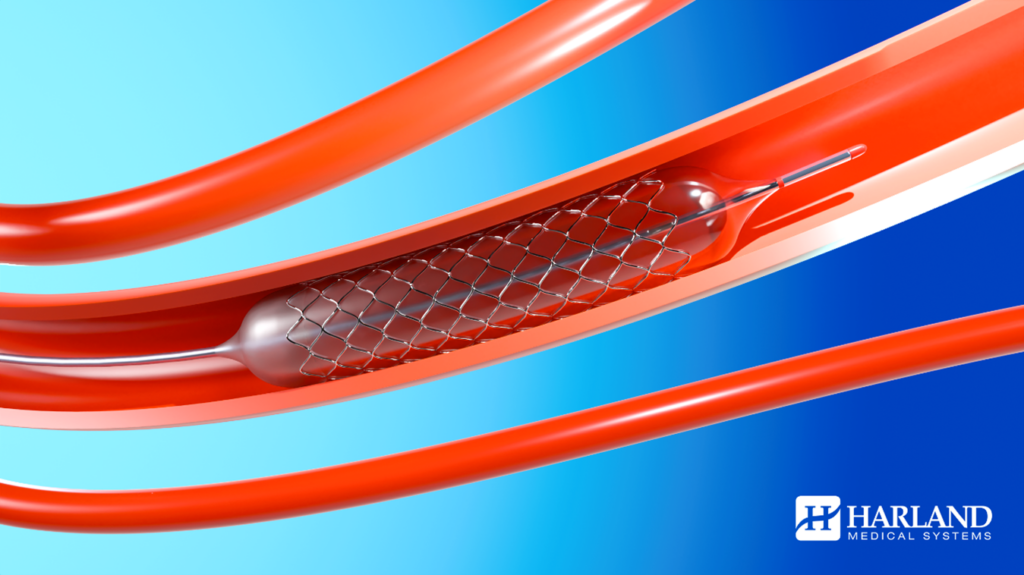
These primarily include catheters, guidewires, introducers, sheaths, and stents.
Catheters and guidewires need to be able to navigate through the complex and narrow anatomy of the vascular system. Hydrophilic coatings significantly reduce surface friction, allowing these devices to glide smoothly through vessels without catching or binding.
This enhanced lubricity improves steerability and control, especially in tortuous paths like coronary or neurovascular arteries where precision is critical.
Sheaths and introducers benefit from hydrophilic coatings by enabling smoother transitions between multiple device components. These access devices are often the first point of entry into the body and must allow other devices to pass through with minimal resistance.
A hydrophilic surface reduces insertion force and drag during device exchanges, which not only enhances procedural efficiency but also decreases the risk of tissue damage at the access site.
Medical Markets Served
Hydrophilic coatings serve a broad range of medical specialties. Key markets include:
- Neurology: Intricate neurovascular demands delicate, fine diameter devices where coatings are applied with utmost precision.
- Cardiology: As minimally invasive procedures become the preferred cardiology treatment in so many areas, the surface performance of the devices they employ is critical.
- Peripheral Vascular: Hydrophilic coatings have become essential to enable treatments for diagnosing and treating peripheral vascular diseases.
- Vascular Access: Low-friction surfaces help to ease device insertion, improve positioning, and reduce patient discomfort during treatment.
- Urology: Hydrophilic coatings are used in urinary catheters and ureteroscopes.
- Ophthalmology: Cataract procedures and the intraocular lens insertion that they require can benefit immensely from micro-devices coated to minimize surface friction.
Hydrophilic coatings can also be used in other markets but are especially prominent in interventional procedures such as cardiology, where devices exist in naturally fluid rich environments that help maintain coating hydration and performance. This makes it easier to consistently achieve the lubricity needed for precise navigation without needing to add any procedural steps for the physician.
How Common Are Hydrophilic Coatings?
In many cases hydrophilic coatings are no longer optional, they are expected. The vast majority of interventional medical devices incorporate some form of lubricious surface treatment.
In highly regulated and competitive markets, OEMs have come to recognize that without a reliable hydrophilic coating, a device may fall short in clinical performance or user adoption. Whether the goal is benchmarking against competitors or meeting clinician demand, having a high-quality hydrophilic coating is often a baseline requirement to reach performance targets and satisfy physicians.
Explaining the Chemistry Behind Hydrophilic Coatings
At a molecular level, hydrophilic coatings are composed of polymers with functional groups that form hydrogen bonds with water molecules. When exposed to moisture, these polymers absorb water and swell, creating a hydrogel surface. This hydrated layer drastically reduces the coefficient of friction between the device and surrounding tissues or fluids.
Common chemistries include polyvinylpyrrolidone (PVP), polyethylene glycol (PEG), and other hydrophilic acrylates or methacrylates. These may be used alone or crosslinked with other materials to tune properties like durability, adhesion, and swelling behavior.
The coating formulation may also include primers, tie-layers, and topcoats to improve adhesion to substrates like stainless steel, nitinol, or silicone, and to enhance performance metrics like lubricity, abrasion resistance, and shelf-life stability.
The goal of the formulation is to balance water uptake with mechanical integrity. Too much swelling can lead to weak adhesion or flaking, while too little may compromise lubricity.
Manufacturing Considerations for Hydrophilic Coatings
Incorporating a hydrophilic coating into a medical device requires thoughtful planning early in the design process.
The first step of the process is to define what type of materials and coating solutions are available that will meet all requirements. Device makers should ask themself, “what performance parameters are crucial to my device’s clinical success?”
Once the goals of the coating have been clearly defined, the process of selecting the coating can begin.
Key considerations include the base material of the device, the desired level of lubricity, the mechanical stress it will experience during use, and sterilization compatibility.
Design teams must consider device geometry and materials which will influence which coating methods are feasible and which chemistries are best suited.
Evaluating Hydrophilic Coating Performance
Hydrophilic coating performance is primarily assessed through a combination of lubricity, durability, and particulate testing.
Lubricity
Lubricity is a measure of how slippery a surface becomes when wet, often quantified through coefficient of friction tests.
High lubricity is important because it provides reduced friction between the coated device and tissue compared with an uncoated device surface.
This enhanced surface performance increases the device’s ability to navigate through tortuous anatomical pathways, improves device control, reduces tissue damage and adds to patient comfort.
The most lubricious coating is not necessarily the best coating. Overly slippery surfaces can reduce control and tactile feedback, especially in precise interventions. A well-balanced coating should offer low friction without compromising device control or safety.
Durability
Durability is crucial to a successful coating. The ideal hydrophilic coating solution for a medical device will provide a photochemical covalent bond to the substrate, producing superior adhesion and wear resistance while minimizing particulate formation.
Durability tests ensure the coating isn’t flaking, chipping, or otherwise being removed from the device to ensure the coating remains effective and safe throughout the procedure.
Low Particulate Generation
Particulate generation evaluates the extent to which the coating sheds particles, which could present safety risks if introduced into the bloodstream.
Interventional medical devices are increasingly being used in smaller vasculature, such as neurovascular and small cardiovascular indications. In these narrow vessels any particulate coming from the device must be kept to an absolute minimum.
Depending on the device application, there may be tight particulate restrictions when passing the device through approval.
Substrate Compatibility

New medical devices are employing a wider variety of substrate materials than ever before. Some devices utilize multiple materials in the same device. So it’s important that the hydrophilic coating a manufacturer selects will perform on the target substrate.
Working with a supplier early in the product development cycle helps identify the hydrophilic coating solutions that are compatible with the possible device substrate material.
Cutting corners on coating selection or application can have major consequences. A poor-quality hydrophilic coating can flake, wear prematurely, or cause inconsistent device performance, potentially undermining an otherwise excellent product.
Maintaining the Coating
Device manufacturers should consider how to maintain the coating prior to applying it. This includes details such as the pot life, storage instructions, and instructions for use.
Different hydrophilic coatings will require different procedures, some being more convenient than others.
Be very cautious of coating features that could cause operational difficulties, as these can be more costly than manufacturers expect.
Some coatings require refrigeration and thaw time, along with mixing prior to use. Considering the entire process needed to apply the coating allows manufacturers to increase efficiency and avoid unforeseen problems later on.

10 Essentials for a Hydrophilic Coating Program
What to consider when selecting a coating program for medical devices such as catheters, guidewires, introducers and other devices.
Other Lubricious Medical Device Coatings
Lubricious coatings are most commonly distinguished by their degree of lubricity, or the amount of reduction in friction they provide. Hydrophilic coatings are one example, but they aren’t the only option.
To understand how to compare lubricious coatings, it’s important to understand the properties of an uncoated sample to provide a reference point.
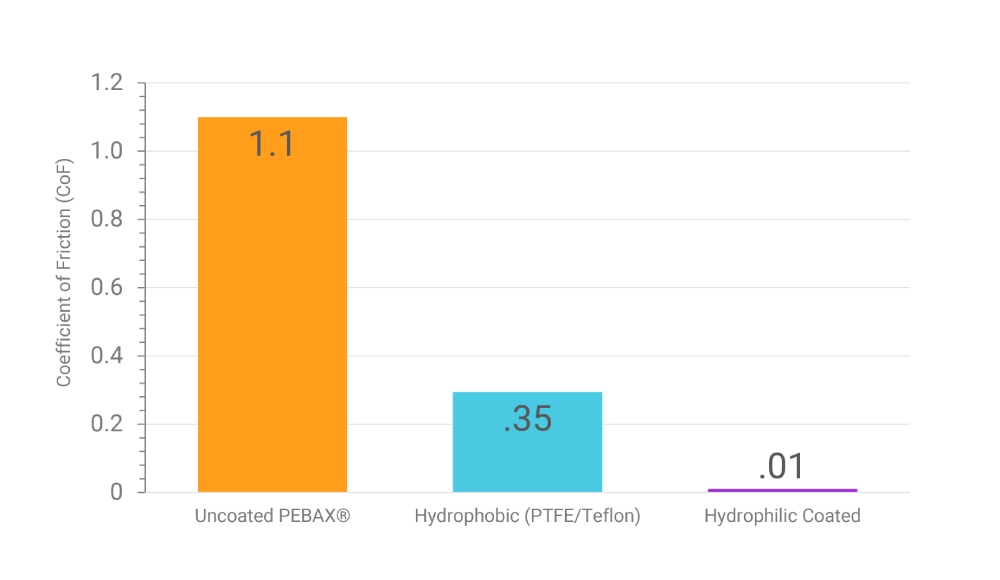
A very common material used in medical devices is PEBAX®, the brand name of polyether block amide. When uncoated, PEBAX® (hardness of 55 ShoreD) generally produces pinch test results of about 500 to 600 grams of pull force. Assuming a 500-gram clamp force was used, the coefficient of friction (CoF) would be (1.0-1.2), a very low level of lubricity. Other uncoated catheter materials of construction such as nylon 12, polyethylene and others exhibit similar CoF.
Such a high level of friction would make many of today’s catheter delivered minimally invasive procedures nearly infeasible.
Devices coated with hydrophilic coatings demonstrate pull forces as low as 3 grams and CoF values as low as 0.01.
Hydrophobic Coatings
Hydrophobic coatings repel water rather than absorb it. While they don’t offer nearly the same degree of lubricity in wet environments as hydrophilic coatings, the main benefit of hydrophobic coatings is that they can reduce friction without needing to be exposed to liquid.
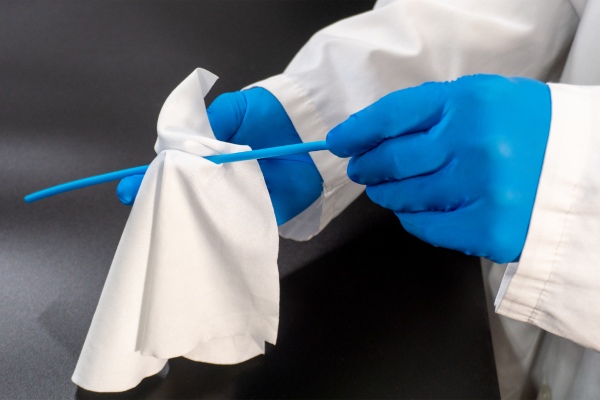
Most hydrophobic coatings are made of PTFE, also known as Teflon®. PTFE has been employed as a material of construction for catheter–type products or as an added coating for guidewires and other devices made from metal. PTFE typically exhibits between 150 and 200 grams of pull force, or a CoF of about 0.3 – 0.4.
If the medical device needs to be low friction but the device won’t touch liquid, there’s a good chance that a hydrophilic coating is a better fit.
Silicone Oil
Silicone Oil has long been used to reduce surface friction on medical catheters, introducers, and other interventional devices. It offers a much-reduced coefficient of friction, at about 0.13, and approximately 125-175 grams of pull force.
It is relatively inexpensive but has seen less use in recent years primarily due to contamination risks.
Simplifying Hydrophilic Coatings for Medical Devices
Bringing a coated medical device to market is a major challenge. Development, testing, compliance, and scaling are just some of the hurdles that can trip up a project’s timeline and budget.
There are a few ways device manufacturers can simplify the process while improving their speed to market.
Manufacturers should find a coating supplier that is dedicated entirely to serving the medical device industry. Familiarity with the medical device industry means a supplier can anticipate the needs of the device and ask the right questions to help launch the finished device to the market.
A coating supplier dedicated to the medical device market can prepare coating processes that are effective and efficient. The supplier should offer regulatory support such as US FDA master files to expedite the submission and approval process.
That’s why more leading device manufacturers around the world are partnering with Harland Medical Systems. As the industry’s only comprehensive source for medical coatings, process development, coating equipment, testing equipment, services and support, Harland is uniquely positioned to provide everything needed to apply a hydrophilic coating to a medical device.
–
The contents of this hydrophilic coating guide have been written and reviewed by the Method Development team at Harland Medical Systems.